For months, whispers have circulated through Cupertino, drifting from supply-chain engineers to industrial designers to contractors who work overnight shifts and swear they’ve seen “something flat, glowing, and unnervingly thin” move through restricted corridors. Most rumors die quickly inside Apple’s notoriously sealed culture.
This one didn’t.
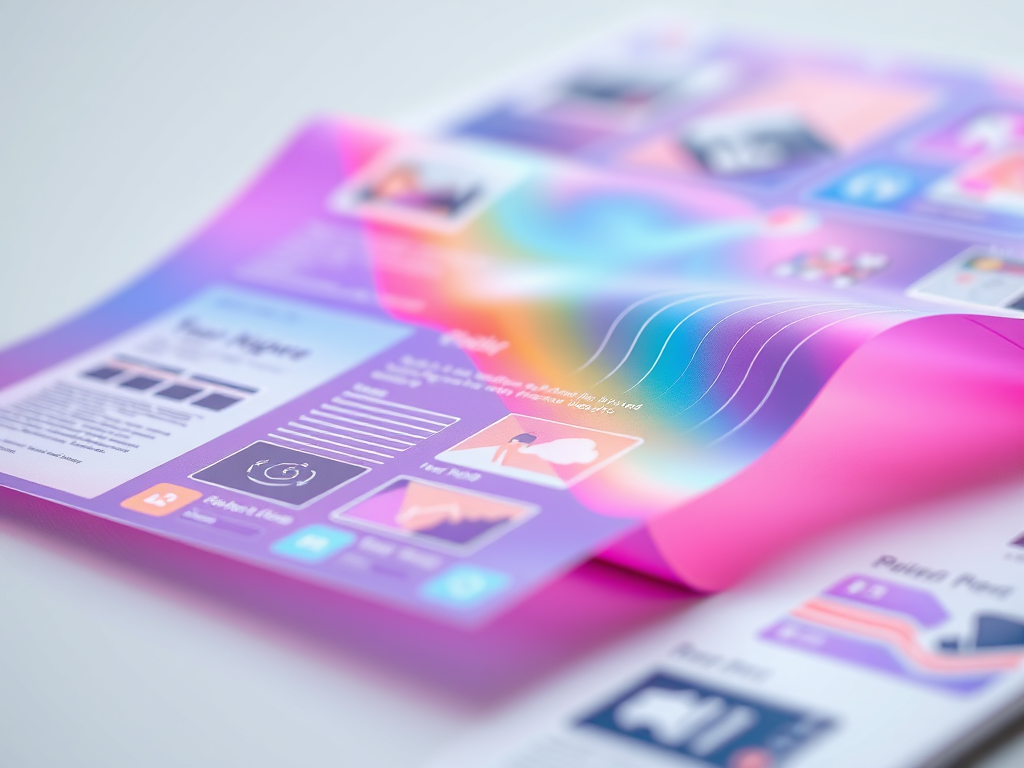
Multiple sources familiar with Apple’s advanced products group say the company is deep into development of a device internally nicknamed iPaper — a flexible, ultra-thin digital sheet intended to replace paper entirely and become “the last display humans will ever need.”
One senior contractor who claims to have seen a prototype described it as:
“A sheet you can fold, crease, roll, and write on — but it acts like a display. Imagine a piece of printer paper that behaves like an iPad Pro.”
“The End of Paper as a Material”
According to internal presentations reviewed by one source, Apple executives believe iPaper could disrupt industries from publishing to education to global logistics. One slide reportedly states:
“Paper is the most widely used interface on Earth. It’s time to sunset it.”
Another source paraphrased a more ambitious line:
“Within a decade, using physical paper will be viewed the same way people now view dial-up internet — a marker of scarcity, not choice.”
The concept — if real — would hinge on breakthroughs in thin-film batteries, micro-LED substrates, and a proprietary “memory flex” polymer Apple has allegedly been testing since 2022. Several of the materials referenced don’t appear in any known commercial supply chain.
When contacted, Apple declined to comment.
A “Universal” Sheet
Two different insiders described iPaper as “formatless.” Instead of discrete apps, the sheet would shift modes depending on how a user manipulates it.
Fold it in half: it becomes two synchronized pages. Roll it into a tube: it enters scroll mode. Lay multiple sheets next to each other: they magnetically mesh into a larger surface.
A former Apple engineer compared the idea to “a living document.”
“We grew up thinking of screens as rigid. Apple wants to make them behave like ideas — fluid, persistent, reshaped with a hand gesture.”
A Status Symbol in Waiting?
If Apple’s internal market projections are accurate, iPaper won’t simply replace notebooks or textbooks — it will reshape social perception.
A source who attended a strategy meeting recalled an executive saying:
“In ten years, physical paper will signal either nostalgia or limited means.”
This echoes Apple’s pattern: redefine the baseline. First the smartphone, then the watch, then spatial computing — each positioned as the “expected” modern interface. iPaper, according to insiders, would be framed as a necessity, not a luxury: environmentally responsible, endlessly reusable, instantly cloud-synced.
Of course, skeptics point out the obvious: Apple has tried — and failed — to build ultra-thin flexible displays before. Several attempts ended with manufacturing headaches or components that degraded over time.
But one source insists:
“Whatever they cracked this year—battery density, polymer stability, or both—it changed the timeline. They think they’re close.”
The Coming Divide?
Analysts say if the rumors are true, the implications go beyond devices.
“Paper is foundational infrastructure,” said another source, speaking on the condition of anonymity. “IDs, passports, packaging, books, receipts, instruction manuals. Replacing it isn’t a product launch — it’s a civilizational shift.”
And if Apple controls the platform that replaces paper, the power dynamics are obvious.
“Imagine a future where anything printed on fiber pulp is seen as outdated, inefficient, or poor,” The source said. “iPaper wouldn’t just kill paper — it could redefine how we view people who still use it.”
For now, iPaper remains a rumor — a ghost of a product drifting through NDAs and guarded hallways.
But in Silicon Valley, enough people are whispering the same thing:
Apple thinks it’s about to reinvent writing itself.

 The Genuine Particle
Leave a comment